Ductless AC systems get smart tech features—and the growing pains that come with them.Ductless mini-split air conditioners have seen a significant surge in popularity in recent years. Recent studies indicate that they now account for over 40 percent of the domestic market share, outpacing larger HVAC units. These smaller systems are even more prevalent in Asia and Europe than in the US.
Mini-splits are an attractive option for climate control for several reasons. They are smaller, easier to install, less expensive, and quieter than traditional HVAC systems. Many of these units are available for purchase at large retail stores and online, making them accessible for DIY enthusiasts. As long as the necessary electrical connections are in place, these units can be installed without professional assistance. However, some mini-splits require 220-volt wiring, which may necessitate the services of an electrician. Additionally, many of these units now come equipped with smart features such as mobile app support, a feature not typically found in HVAC units without a high-end thermostat.
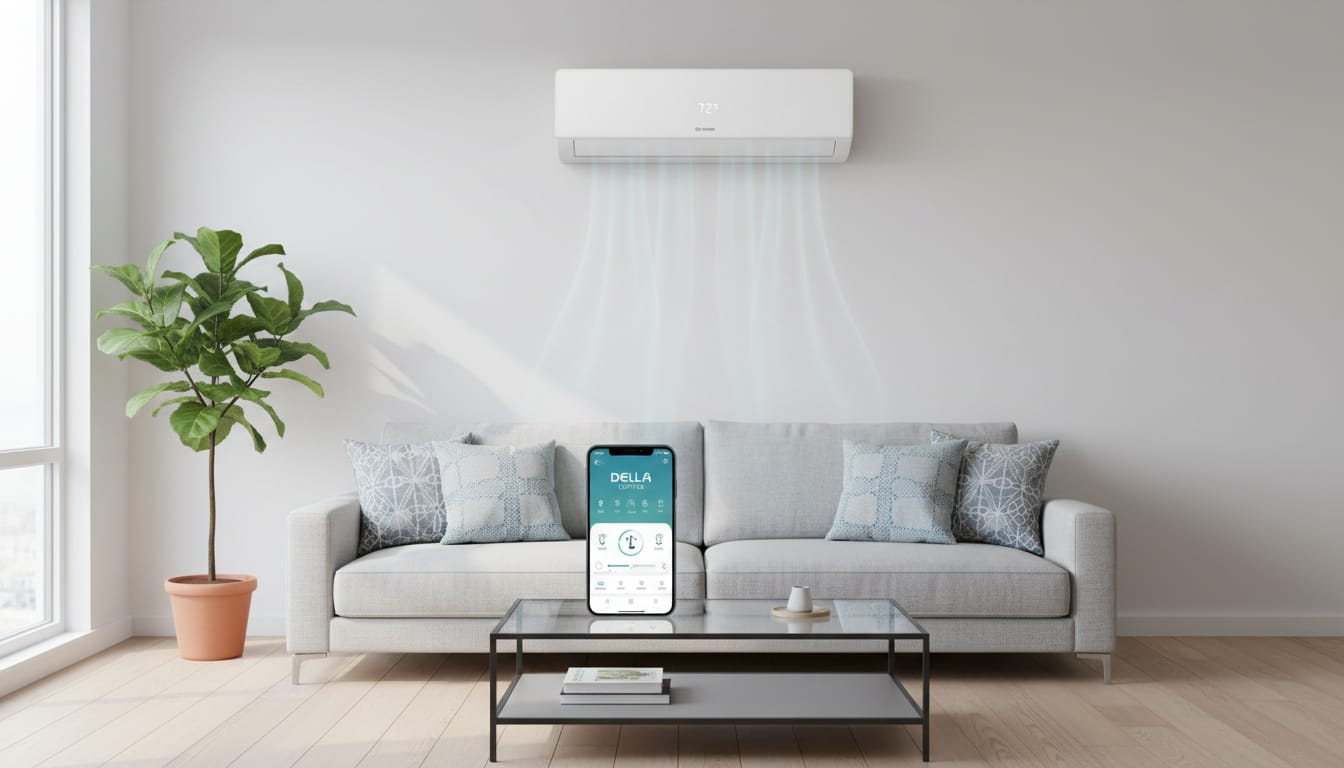
I was recently invited by Della to test their Optima 048-TP-12K1V-23S-IN mini-split. This unit boasts 12,000 BTU of cooling and 12,400 BTU of heating capacity, with a maximum power draw of 960 watts from a 115-volt circuit. It’s designed to cover an area of 550 square feet, making it suitable for a small room. The manufacturer generously offered to cover the cost of professional installation, an offer I was keen to accept.
The Della Optima arrived in three boxes, each containing a primary component: the indoor air handler, the compressor, and the conduit connecting the two. The air handler is mounted to a metal bracket inside the home, and a template is provided to guide the installation process.
While the Della Optima is priced at a reasonable $921 (with an Amazon coupon), the cost of professional installation can be significantly higher. A local provider in Austin quoted $3,600 for the installation. The installation process, carried out by a two-person crew, took about five hours. This included the removal of the old unit and the drilling of a new conduit hole. The process was straightforward, with the only notable aspect being the need for a new conduit hole due to the location of the old unit’s hole.