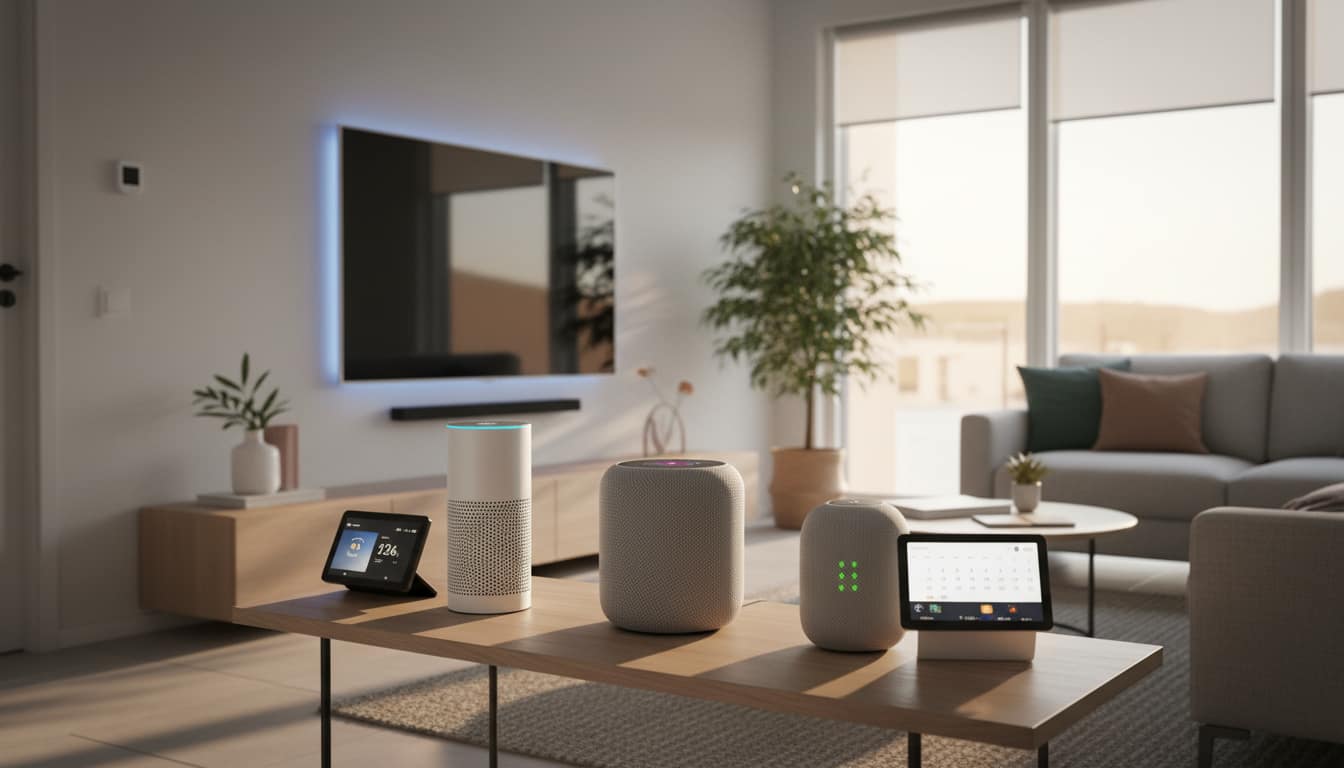
If you’re waffling between Alexa, Siri, and Google, the answer may already be in your home.To establish a smart home, a voice assistant is essential. This assistant, typically integrated into a smart speaker, allows you to control your smart home and manage various routines using your voice. It also serves as a hub for any gadget you wish to incorporate into your home, ranging from smart garage controls to voice-controlled blinds.
However, the question arises: which assistant should you opt for? Each major contender has its own advantages and disadvantages. I suggest making a choice based on what you use on a daily basis. Your smartphone is the most straightforward starting point to choose between Apple or Google. If you desire a wide array of smart speakers and have a Prime subscription, Amazon might be worth considering.
Before making a decision, examine what’s already in your home to determine compatibility with different ecosystems. The best system for you will be the one that offers the least resistance, whether that’s utilizing your smartphone’s dedicated assistant or sticking with a platform that best integrates with your existing devices.
Let’s delve into the specifics of Amazon Alexa, Apple Home, and Google Gemini.
Amazon Alexa, courtesy of Amazon, offers a vast selection of smart speakers and device compatibility. However, it does have its drawbacks, such as paywalls, a mediocre new assistant, and Ring’s controversial policy.
Alexa was the pioneer in the smart home revolution, with the first Amazon Echo speaker in 2012 making smart homes accessible to everyone. Today, Amazon still offers the broadest range of options, with 11 main models of smart speakers and displays currently available, along with several older versions of the same devices.
Amazon’s speakers are user-friendly and offer excellent voice control, making them an ideal starting point. Alexa can create different profiles for family members and link information like calendars to these profiles. Amazon also owns Ring, which integrates seamlessly with Echo speakers. However, due to Ring’s partnership with Axon, which allows local law enforcement to request footage directly from Ring users, we advise against using Ring’s cameras. There are also concerns about its data collection practices.
One downside is the presence of paywalls. Amazon is rolling out an updated version of Alexa, Alexa+, which will cost $20 a month unless you have Amazon Prime. Currently, it’s in Early Access and is free, but non-Prime users can only demo it for 30 days before needing to upgrade to Prime to continue using it.